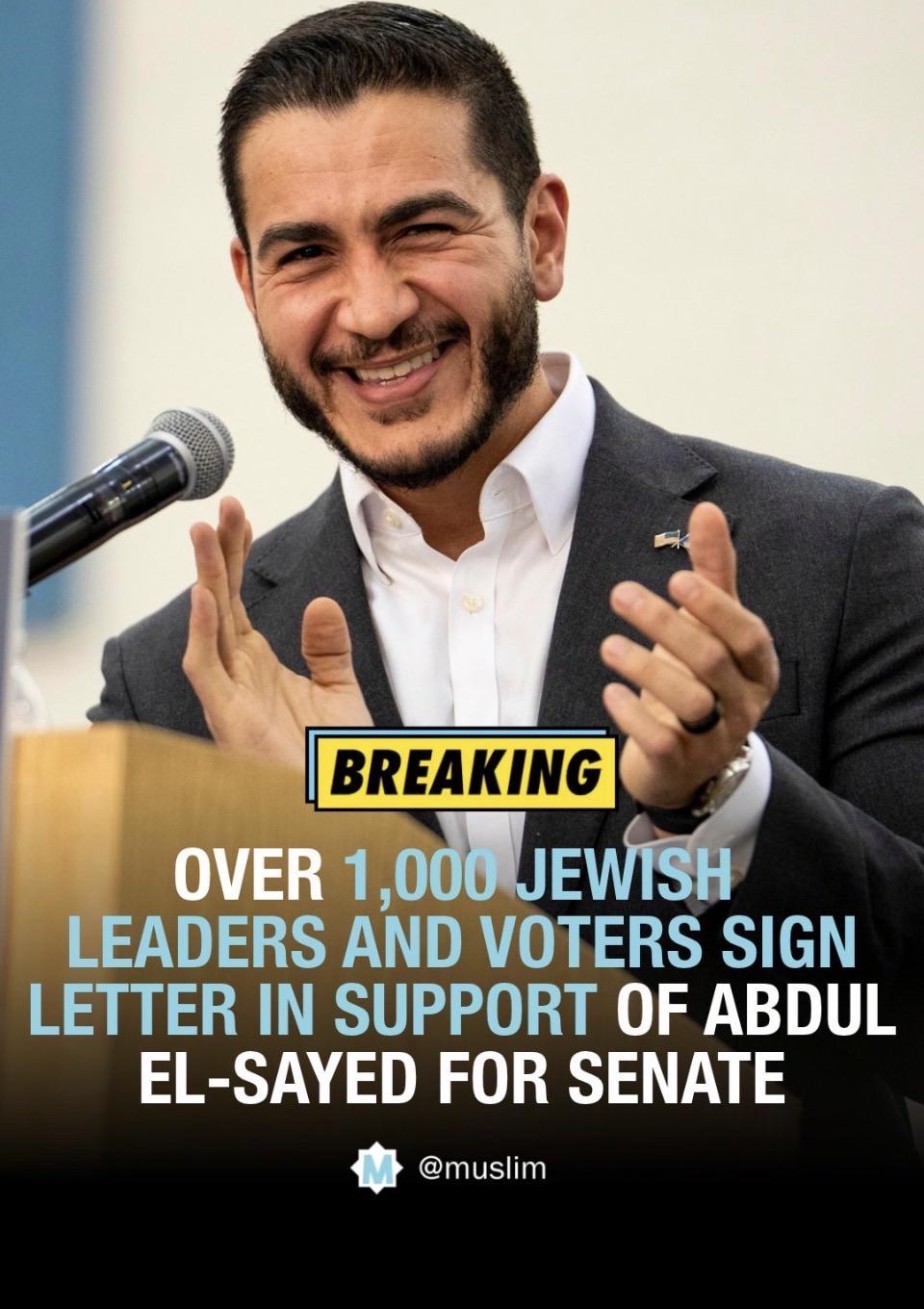
Michigan has made history with the election of Abdul El Sayed, a moment celebrated by many as a turning point for representation and progressive politics. The victory has ignited a wave of enthusiasm, with supporters hailing it as a win not just for Michigan but for the nation as a whole. As one person exclaimed, 'Im so happy!!! What a day!! I pray he does well for the American people but today is HISTORIC!!'
A Victory Against the Odds
El Sayed's win comes amid a highly polarized political climate, where his identity as a Muslim and his progressive platform faced significant opposition. Critics, including figures like Hailey Stevens, had campaigned against him, reportedly spending millions in efforts that ultimately failed to sway voters. 'Hailey Stevens threw herself into the dustbin of history for nothing,' one observer noted, highlighting the ineffectiveness of these campaigns.
The Role of Identity and Policy
The election has sparked conversations about the intersection of identity and politics. El Sayed's background as a Muslim in a predominantly Christian nation has been a focal point, with some arguing that his victory challenges stereotypes and promotes inclusivity. 'Even with all the astroturfed propaganda calling him a terrorist, more than 60% of the Jewish voters went for the antizionist Muslim over a Republican,' one commenter pointed out, underscoring the complexity of identity in voting decisions.
However, not all reactions have been positive. Critics have raised concerns about the influence of foreign policy issues, particularly regarding Israel and Zionism, on the election. 'Zionism. That's it, that's the reason. Israel good, Muslim bad. And they have conflated Zionism with Judaism. So here we are,' one person remarked, suggesting that these issues played a significant role in shaping the discourse.
A Unifying Figure?
Despite the divisions, El Sayed's victory has managed to bridge some ideological gaps. Even conservative voters have expressed hope for his success, with one stating, 'I’m conservative and I hope he does good.' This sentiment reflects a broader desire for effective leadership, regardless of political affiliation.
Looking Ahead
As Michigan moves forward, the focus shifts to El Sayed's ability to deliver on his promises. From healthcare to economic policies, expectations are high. 'Let's gooooo medicare for all y'all,' one supporter cheered, capturing the optimism surrounding his progressive agenda.
Michigan's historic election is more than just a political victory; it's a statement about the changing face of American politics. Whether El Sayed can live up to the hype remains to be seen, but for now, the state—and the nation—is watching with hope and anticipation.